Home Blog Page 18

Silence part 1

0

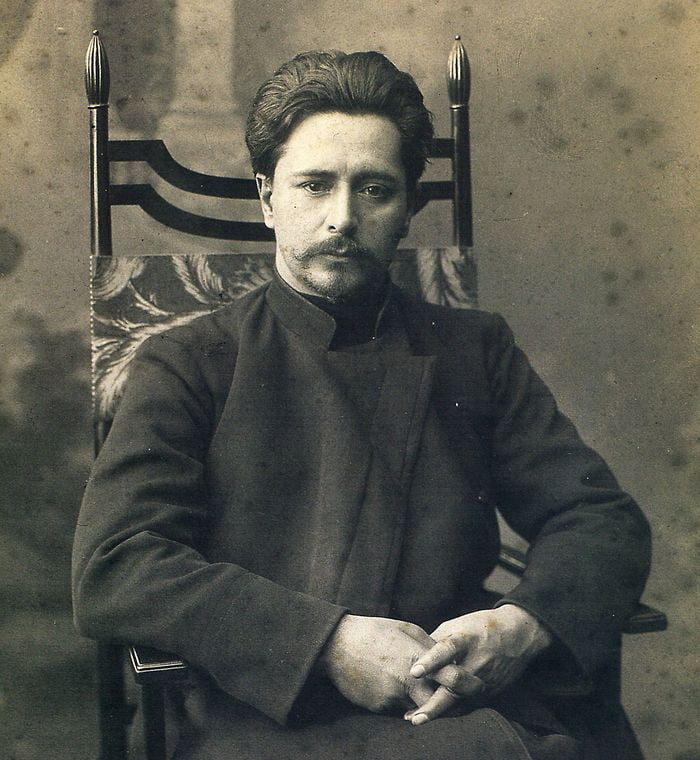
Leonid Andreyev (1871-1919)

Born in 1871 at Orel, Andreyev struggled for many years to earn a livelihood as a lawyer. He began writing in 1900, and was helped and encouraged by Gorky. The note of tragedy and fatalism that characterizes his plays and novels is present also in his numerous short stories, of which Silence is typical.

The present version, translated by John Cournos, was published by Brown Brothers, copyright, 1910. It is reprinted by permission of the present owners, Frank-Maurice, Inc.

Silence

Pane moonlit night in May, while the nightingales sang, Father Ignatius wife entered his chamber. Her countenance expressed Itlircring, and the little lamp she held in her hand trembled. Approaching Ixer husband, she touched his shoulder, and managed to say between her sobs:
“Father, let us go to Verochka.”

Without turning his head, Father Ignatius glanced severely at his wife over the rims of his spectacles, and looked long and intently, till (he waved her unoccupied hand and dropped on a low divan.

“That one toward the other be so pitiless!” she pronounced slowly, With emphasis on the final syllables, and her good plump face was distorted with a grimace of pain and exasperation, as if in this manner she winked to express what stern people they were her husband and daughter.

Father Ignatius smiled and arose. Closing his book, he removed his nectacles, placed them in the case and meditated. His long, black beard, in woven with silver threads, lay dignified on his breast, and it slowly heaved at every deep breath.

“Well, let us go!” said he.

Olga Stepanovna quickly arose and entreated in an appealing, timid voice:

“Only dont revile her, father! You know the sort she is.”

Veras chamber was in the attic, and the narrow, wooden stair bent and creaked under the heavy tread of Father Ignatius. Tall and ponderous, he lowered his head to avoid striking the floor of the upper story, and frowned disdainfully when the white jacket of his wife brushed his face. Well he knew that nothing would come of their talk with Vera.

“Why do you come?” asked Vera, raising a bared arm to her eyes. The other arm lay on top of a white summer blanket hardly’distinguish- able from the fabric, so white, translucent and cold was its aspect.

“Verochka!” began her mother, but sobbing, she grew silent.

“Vera!” said her father, making an effort to soften his dry and hard voice. “Vera, tell us, what troubles you?”

Vera was silent.

“Vera, do not, we, your mother and I, deserve your confidence? Do we not love you? And is there someone nearer to you than we? Tell us about your sorrow, and believe me youll feel better for it. And we too. Look at your aged mother, how much she suffers!”

“Verochka!”

Read More about Customized tour Bulgaria
A Letter and a Paragraph part 8

0

Bear with me, my dear Will, until I have told you I have written this letter and what it means. I have concealed one thing from you for I he last six months. I have disease of the heart, and the doctor has told me that I may die at any moment. Somehow, I think I know the moment is close at hand; I shall soon go to that narrow cot on the right of the door, and I do not believe I shall wake up in the morning with (he sun in my eyes, to look across the room and see that its companion is gone.

For I am in the old room, Will, as you know, and it is not ten years since you went away, but two days. The picture that has seemed real to me as I wrote these pages is fading, and the thin gas-jet flickers and sinks as it always did in these first morning hours. I can hear the roar of the last Harlem train swell and sink, and the sharp clink of car-bells breaks the silence that follows. The wind is gasping and struggling in the chimney, and blowing a white powdery ash down on the hearth. I have just burnt my poems and the play.

Both the table drawers are empty now; and soon enough the two empty chairs will stare at each other across the bare table. What a wild dream have I dreamt in all this emptiness! Just now, I thought indeed that it was true. I thought I heard a womans step behind me, and I turned.
Peace be with you, Will, in the fulness of your love. I am going to sleep. Perhaps I shall dream it all again, and shall hear that soft footfall when the turn of the night comes, and the pale light through the ragged blind, and the end of a long loneliness.

After I am dead, I wish you to think of me not as I was, but as I wanted to be. I have tried to show you that I have led by your side a happier and dearer life of hope and aspiration than the one you saw. I have tried to leave your memory a picture of me that you will not shrink from calling up when you have a quiet hour and time for thought of the friend whom you knew well; but whom you may, perhaps, know better now that he is dead.

Reginald Barclay

The Paragraph (From the New York Herald of Nov. 18, 1883.)

Reginald Barclay, a journalist, was found dead in his bed at 15. St. Marks Place, yesterday morning. No inquest was held, as Mr. Barclay had been known to be suffering from disease of the heart, and his death was not unexpected. The deceased came originally from Oneida County, and was regarded as a young journalist of considerable promise.

He had been for some years on the city staff of the Record, and was the correspondent of several out-of-town papers. He had also contributed to the monthly magazines, occasional poems and short stories, which showed the possession, in some measure, of the imaginative faculty. Mr. Barclay was about thirty years of age, and unmarried.

Read More about Tour Packages Balkan

A Letter and a Paragraph part 7

0

At first I was frightened, and fought against it as against something that might grow upon me. I reproached myself for disloyalty in thought. Ah! what need had I to fight? What need had I to choke down rebellious fancies, while my wifes love was working that miracle that makes two spirits one?

What is it, this union that comes to us as a surprise, and remains for all outside an incommunicable mystery?

Unmarried love

What is this that makes our unmarried love seem so slight and childish a thing? You and I, who know it, know that it is no mere fruit of intimacy and usage, although its growth it keeps pace with these. We know that in some subtle way, it has been given to a man to see a womans soul as he sees his own, and to a woman to look into a mans heart as if it were, indeed, licrs.

But the friend who sits at my table, seeing that my wife and I understand each other at a simple meeting of the eyes, makes no more of it than he does of the glance of intelligence which, with close friends, ulien takes the place of speech. He never dreams of the sweet delight with which we commune together in a language that he cannot underhand that he cannot hear a language that has no formulated words, I’eeling answering feeling.

It is not wonderful that I should wish to give expression to the gratitude with which I have seen my life made to blossom thus; my thankfulness for the love which has made me not only a happier, but, I humbly believe, a wiser and a better-minded man. But I know too well the hopelessness of trying to find words to describe what, were I a poet, my best song might but faintly, faintly echo.

I thought I heard a rustle behind me just now. In a little while my wife will come softly into the room, and softly up to where I am sitting, stepping silently across your bearskin rug, and will lay one hand softly on my left shoulder, while the other slips down this arm with which I write, until it falls and closes lightly, yet with loving firmness, on my hand that holds the pen.

And I shall say, “Only the last words to Will and his wife, dear.” And she will release my hand, and will lift her own, I think, to caress the patch of gray hair on my temple; it is a way she has, as though it were some pitiful scar, and she will say, “Give I hem my love, and tell them they must not fail us this Christmas. I want them to see how our Willy has grown.” And when she says “Our Willy,” the hand on my shoulder will instinctively close a little, clingingly; and she will bend her head, and put her face close to mine, and I shall turn and look into her eyes.

Read More about Mystical Bulgaria Tours

A Letter and a Paragraph part 6

0

It was so at the beginning, in the incredible happiness of the first year, and even after the boys birth. Do you know, it was months before I could accept that boy as a fact? If, at any moment, he had vanished from my sight, crib and all, I should not have been surprised. I was not sure of him until he began to show his mothers eyes.

Yes, even in those days some of the old leaven worked in me. I had moments of that old barbaric freedom which we used to rejoice in that feeling of being answerable to nothing in the world save my own will the sense of untrammeled, careless power.

City Hall

Do you remember the night that we walked till sunrise? You remember how hot it was at midnight, when we left the office, and how the moonlight on the statue above the City Hall seemed to invite us field ward, where no gaslight glared, no torches flickered. So we walked idly northward, through the black, silence-stricken down-town streets; through that feverish, unresting central region that lies between the vileness of Houston Street and the calm and spacious dignity of the brownstone ways, where the closed ‘and darkened dwellings looked like huge tombs in the pallid light of the moon. We passed the suburban belt of shanties; we passed the garden-girt villas beyond them, and it was from the hill above Spuyten Duyvil that we saw the first color of the morning upon the face of the Palisades.

It would have taken very little in that moment to set us off to tramping the broad earth, for the pure joy of free wayfaring. What was there to hold us back? No tie of home or kin. All we had in the world to leave behind us was some futile scribbling on various sheets of paper. And of that sort of thing both our heads were full enough. I think it was but the veriest chance that, having begun that walk, we did not go on and get our fill of wandering, and ruin our lives.

Well, that same wild, adventurous spirit came upon me now and then. There were times when, for the moment, I forgot that I had a wife and a child. There were times when I remembered them as a burden. Why should I not say this? It is the history of every married man, at least of every manly man, though he be married to the best woman in the world. It means no lack of love. It is as unavoidable as the leap of the blood in you that answers a trumpet-call.

Read More about Isaac Comnenus 8

A Letter and a Paragraph part 5

0

Strangest of all this, that the mad agony of grief, the passion of desolation that came upon me when our long partnership was dissolved for ever, should now be nothing but a memory, like other memories, to be summoned up out of the resting-places of the mind, toyed with, idly questioned, and dismissed with a sigh and a smile! What a real thing it was just ten years ago; what a very present pain! Believe me, Will, yes, I want you to believe this that in those first hours of loneliness I could have welcomed death; death would have fallen upon me as calmly as sleep has fallen upon my boy in the room beyond there.

Extravagant

You knew nothing of this then; I suppose you but half believe it now; for our parting was manly enough. I kept as stiff an upper lip as you did, for all there was less hair on it. Perhaps it seems extravagant to you. But there was a deal of difference between our cases. You had turned your pen to money-making, at the call of love; you were going to Stillwater to marry the judges daughter, and to become a great land-owner and mayor of Stillwater and millionaire or what is it now? And much of this you foresaw or hoped for, at least. Hope is something. But for me? I was left in the third-story of a poor lodging- house in St. Marks Place, my best friend gone from me; with neither remembrance nor hope of Love to live on, and with my last story back from all the magazines.

We will not talk about it. Let me get back to my pleasant library with the books and the pictures and the glancing fire-light, and me with my feet in your bearskin rug, listening to my wifes step in the next room.
To your ear, for our communion has been so long and so close that to either one of us the faintest inflection of the others voice speaks clearer than formulated words; to your ear there must be something akin to a tone of regret regret for the old days in what I have just said. And would it be strange if there were?

A poor soldier of fortune who had been set to a mans work before he had done with his meager boyhood, who had passed from recruit to a place of a young veteran in that great, hard-fighting, unresting pioneer army of journalism; was he the man, all of a sudden, to stretch his toughened sinews out and let them relax in the glow of the home hearth? Would not his legs begin to twitch for the road; would he not be wild to feel again the rain in his weatherbeaten face?

Would you think it strange if at night he should toss in his white, soft bed, longing to change it for a blanket on the turf, with the broad procession of sunlit worlds sweeping over his head, beyond the blue spaces of the night? And even if the dear face on the pillow next him were to wake and look at him with reproachful surprise; and even if warm arms drew him back to his new allegiance; would not his heart in dreams go throbbing to the rhythm of the drum or the music of songs sung by the camp-fire?

Read More about A Wagner Matinee part 4

A Letter and a Paragraph part 4

0

It was a small matter, but the friendship begun in manly and helpful kindness has gone on for twenty-two years in mutual faith and loyalty; and the growth dignifies the seed.

A sturdy growth it was in its sapling days. It was in the late spring that we decided to take the room together in St. Marks Place. A big room and a poor room, indeed, on the third story of that “battered caravanserai,” and for twelve long years it held us and our hopes and our despairs and our troubles and our joys.

First purchase

I dont think I have forgotten one detail of that room. There is the generous old fireplace, insultingly bricked up by modern poverty, all save the meager niche that holds our fire when we can have a fire. There is the great second-hand table our first purchase where we sit and work for immortality in the scant intervals of working for life. Your drawer, with the manuscript of your Concordance of Political Economy, is to the right. Mine is to the left; it holds the unfinished play, and the poems that might better have been unfinished. There are the two nar-row cots yours to the left of the door as you enter; mine to the right.

How strange that I can see it all so clearly, now that all is different!
Yet I can remember myself coming home at one oclock at night, dragging my tired feet up those dark, still, tortuous stairs, gripping the shaky baluster for aid. I open the door I can feel the little old- fashioned brass knob in my palm even now and I look to the left. Ah, you are already at home and in bed.

I need not look toward the table. There is money a little in the common treasury; and, in accordance with our regular compact, I know there stand on that table twin bottles of beer, half a loaf of rye bread, and a double palms- breadth of Swiss cheese. You are staying your hunger in sleep: for one may not eat until the other comes. I will wake you up, and we shall feast together and talk over the day that is dead and the day that is begun.

Strange, is it not, that I should have some trouble to realize that this is only a memory, I, with my feet in the bearskin rug that it would have beggared the two of us, or a dozen like us, to purchase in those days. Strange that my mind should be wandering on the crude work of my boyhood and my early manhood.

I who have won name and fame, as the world would say. I, to whom young men come for advice and encouragement, as to a tried veteran! Strange that I should be thinking of a time when even your true and tireless friendship could not quench a subtle hunger at my heart, a hunger for a more dear and intimate comradeship. I, with the tenderest of wives scarce out of my sight; even in her sleep she is no further from me than my own soul.

Read More about Tours Bulgaria around Monasteries

A Letter and a Paragraph part 3

0

I could only silently pray that he would “give me an easy one,” and that I should not disgrace myself in the doing of it. By Jove, Will, what an old martinet Baldwin was, for all his good heart! Do you remember that sharp, crackling voice of his, and the awful “Be brief! be brief!” that always drove all capacity for condensation out of a mans head, and set him to stammering out his story with wordy incoherence? Baldwin is on the Record still. I wonder what poor devil is trembling at this hour under that disconcerting adjuration.

A wretched day that was! The hours went slow as grief. Smeary little barearmed fiends trotted in from the composing-room and out again, bearing fluttering galley-proofs. Bedraggled, hollow-eyed men came in from the streets and set their soaked umbrellas to steam against the heater, and passed into the lions den to feed him with news, and were sent out again to take up their half cooked umbrellas and so forth to forage for more. Everyone, I thought, gave me one brief glance of contempt and curiosity, and put me out of his thoughts. Everyone had some business everyone but me. The men who had been waiting with me were called up one by one and detailed to work. I was left alone.

Torture my nervously active

Then a new horror came to torture my nervously active imagination. Had my superior officer forgotten his new recruit? Or could he find no task mean enough for my powers? This filled me at first with a sinking shame, and then with a hot rage and sense of wrong. Why should he thus slight me? Had I not a right to be tried, at least? Was there any duty he could find that I would not perform or die? I would go to him and tell him that I had come there to work; and would make him give me the work. No, I should simply be snubbed, and sent to my seat like a schoolboy, or perhaps discharged on the spot. I must bear my humiliation in silence.

I looked up and saw you entering, with your bright, ruddy boys face shining with wet, beaming a greeting to all the room. In my soul I cursed you, at a venture, for your lightheartedness and your look of cheery self-confidence. What a vast stretch of struggle and success set you above me you, the reporter, above me, the novice! And just then awful summons “Barclay! Barclay!”

I shall hear that strident note at the judgment day. I went in and got my orders, and came out with them, all in a sort of daze that must have made Baldwin think me an idiot. And then you came up to me and scraped acquaintance in a desultory way, to hide your kind intent; and gave me a hint or two as to how to obtain a full account of the biennial meeting of the Post-Pliocene Mineralogical Society, or whatever it was, without diving too deeply into the Post-Pliocene period. I would have fought for you to the death, at that moment.

Read More about Baba Vanga

A Letter and a Paragraph part 2

0

I tell you, Will, that moment was to me like one of those moments of waking that we know in childhood, when we catch the going of a dream too subtly sweet to belong to this earth a glad vision, gone before our eyes can open wide; not to be figured into any earthly idea, leaving in its passage a joy so high and fine that the poets tell us it is a memory of some heaven from which our young souls are yet fresh.

You can understand how it is that I find it hard to realize that there can be such things in my life; for you know what that life was up to a few years ago. I am like a man who has spent his first thirty years in a cave. It takes more than a decade above ground to make him quite believe in the sun and the blue of the sky.

I was sitting just now before the hearth, with my feet in the bearskin rug you sent us two Christmases ago. The light of the low wood fire was chasing the shadows around the room, over my books and my pictures, and all the fine and gracious luxuries with which I may now make my eyes and my heart glad, and pamper the tastes that grow with feeding. I was taking count, so to speak, of my prosperity the material treasures, the better treasure that I find in such portion of fame as the world has allotted me, and the treasure of treasures across the threshold of the next room in the next room? No there, here, in every room, in every corner of the house, filling it with peace, is the gentle and holy spirit of love.

Great gloomy room

As I sat and thought, my mind went back to the day that you and I first met, twenty-two years ago twenty-two in February next. In twenty-two years more I could not forget that hideous first day in the city room of the Morning Record. I can see the great gloomy room, with its meager gas-jets lighting up, here and there, a pale face at a desk, and bringing out in ghastly spots the ugliness of the ink-smeared walls. A winter rain was pouring down outside. I could feel its chill 1 and damp in the room, though little of it was to be seen through the grimy window-panes.

The composing room in the rear sent a smell of ink and benzine to permeate the moist atmosphere. The rumble and shiver of the great presses printing the weekly came up from below. I sat there in my wet clothes and waited for my first assignment. I was eighteen, poor as a church mouse, green, desperately hopeful after a boys fashion, and with nothing in my head but the Latin and Greek of my one single year at college. My spirit had sunk down far out of sight. My heart beat nervously at every sound of that awful city editors voice, as he called up his soldiers one by one and assigned them to duty.

Read More about Isaac Comnenus 31

A Letter and a Paragraph part 1

0

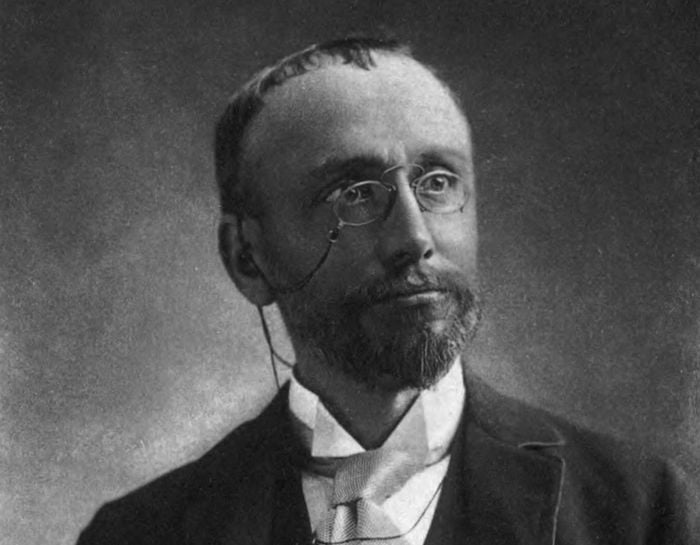
Henry Cuyler Bunner (1855-1896)

Bunner`s fame rests on the work he published in the last fifteen years of his life. Born at Oswego, N. Y., he went when he was very young to New York for his education. It soon became apparent that literature was to be his career, and he joined the staff of the Arcadian. Later he became the editor of Puck. The first of Bunners stories to meet with success was The Midge (1886), a tale of New York life. Then followed a number of others which were subsequently collected in several volumes, Short Sixes (1891) among them. His stories are distinguished by simplicity of motive, and are related with subtle humour and an underlying pathos, escaping any sentimentality.

A Letter and a Paragraph is reprinted from Stories of H. C. Bunner, copyright, 1891, 1896, by Charles Scribners Sons, by permission of the publishers.

A Letter and a Paragraph

The Letter

New York, Nov. 16, 1883.

My Dear Will

You cannot be expected to remember it, but this is the fifth anniversary of my wedding-day, and to-morrow it will be to-morrow before this letter is closed is my birthday my fortieth. My head is full of jhose thoughts which the habit of my life moves me to put on paper, ‘where I can best express them; and yet which must be written for only the friendliest of eyes. It is not the least of my happiness in this life that 1 have one friend to whom I can unlock my heart as I can to you.

The wife has just been putting your namesake to sleep. Dont infer that, even on the occasion of this family feast, he has been allowed to sit up until half past eleven. He went to bed properly enough, with a tear or two, at eight; but when his mother stole into his room just now, after her custom, I heard his small voice raised in drowsy inquiry; and I followed her, and slipped the curtain of the doorway aside, and looked. But I did not go into the room.

The shaded lamp was making a yellow glory in one spot the head of the little brass crib where my wife knelt by my boy. I saw the little face, so like hers, turned up to her. There was a smile on it that I knew was a reflection of hers. He was winking in a merry half-attempt to keep awake; but wakefulness was slipping away from him under the charm of that smile I could not see.

His brown eyes closed, and opened for an instant, and closed again as the tender, happy hush of a childs sleep settled down upon him, and he was gone where we in our heavier slumbers shall hardly follow him. Then, before I could see my wifes face as she bent and kissed him, I let the curtain fall, and crept back here, to sit by the last of the fire, and see that sacred sight again with the spiritual eyes, and to dream wonderingly over the unspeakable happiness that has in some mysterious way come to me, undeserving.

Read More about Orpheus and Eurydice 1

Toulouse

0

Facing the Mediterranean on one side and the atlantic on the other, Toulouse is one of europes oldest settlements.

Art day and night

Toulouse is among the most vibrant cities not just of France but of all Europe. And music makes itself felt almost everywhere in the city. The strains of jazz, classical and alternative music spill over into the streets from the citys many charming cafes. A rich array of artistic events and festivals at almost every season of the year make Toulouse one of Frances biggest drawing points.If youve decided to explore and get to know France, then you must include Toulouse on your list. The streets of this city, where art and music never stop 24/7, will boggle your mind.

An impressive Cultural Fabric

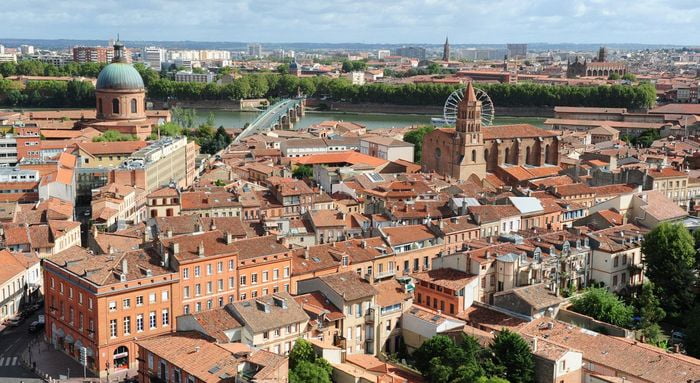
The history of Toulouse goes back more than two thousand years, its foundations laid by Europes most mysterious people, the Celts.But the Romans, the Visigoths and Saint Sernin, who introduced Christianity to the city, all had a major influence on its deep-rooted past. The roof tiles and bricks unique to the region constitute the most striking feature of the local architecture. Built of these local bricks, the St. Sernin Basilica stands out in all its glory. And Le Capitol Square and the National Theater building are the concrete embodiments of the citys cultural identity.

La Ville Rose

The rising and setting sun create magnificent plays of light on the citys brick texture, and the rainbow of reflections engendered by this interplay of nature and architecture has led to the city being dubbed La Ville Rose, the pink city.

The Garonne River and Pont Neuf

Toulouses finest views are to be seen along the banks of the Garonne River. The Pont Neuf, or new bridge, that joins its two banks adorns the river like a necklace, literally begging visitors to photograph the rhythmic repetition of its arches in the water. The river bank is also ideal for a pleasant evening stroll. Old books, postcards and other memorabilia are sold in the flea markets, secondhand shops and bookstalls that line the river on both sides and spill over into the side streetsSponsored by the Andalucia government open de Andalucia do golf by Turkish Airlines.Tournament was held in march in the spanish city of Malaga. Turkish Airlines was official airline partner for the event.Winner of this years tournament, played by golfs world stars was Paul Lawrie of Scotland. The organizer of the Open de Andalucia de Golf by Turkish Airlines tournament is Spains most world-famous golfer, the legendary Miguel Angel Jimenez, in whose hometown, Malaga, the Open de Andalucia was held at the Parador de Malaga golf course.

Read More about Silence part 5