Home Blog Page 20

The prerequisites for inflation do not exist at present

0

“The threatening scenarios are a factor. They cannot be ignored.”

Investors found themselves staring spellbound at the quotation boards A of financial markets in mid-March. The inferno in Japan had stoked uncertainty in particular, which was already high due to the uprisings in North Africa and the sharp rise in the oil price. Christian Ohswald, Manager of Private Banking at Raiffeisenlandesbank Niederdsteneich- Wien, puts it thus: “The threatening scenarios are a factor. You cannot simply ignore the levels of national debt now prevalent in European periphery countries, the problems in the Arab world, or the situation in Japan.”

The signs were positive when it came to saving the euro, at least, after heads of government in the Eurozone states reached an agreement to double the euro rescue package. On the other hand, the rise in inflation, which reached 2.4 percent in the Eurozone in February, continues to generate concern. Susanne Hollinger, Private Banking Manager ofErste Bank, commented: “The rate of inflation has risen in Europe.

But Im not expecting to see a further sharp increase in the near future, however, or even inflation spiralling out of control.” Jurgen Danzmayr, Head of Private Banking at Bank Austria, went on: “For inflation actually to experience a lasting rise, the wage-price-spiral needs to begin spiralling very quickly, and the preconditions for this dont exist at present.

Those still wishing to play it safe can invest part of their assets in inflation-linked bonds. According to Marcel Landesmann, Chair of the Board of Directors at Bank Vontobel 0sterreich, however, wise heads will not pursue such a strategy too brashly. Landesmann: “Inflation could rise to three percent in the medium term. Buying inflation-linked bonds only makes sense, however, if the increase actually turns out to be higher.” Raiffeisen expert Ohswald agrees: “inflation-proof bonds do not protect you against rising real rates of interest. In a scenario of that nature, they need to be handled as carefully as traditional government bonds.”

“Inflation could rise to three percent in the medium term.”

Where shares are concerned, the paper form continues to point to useful opportunities. However, investors should not flirt with the idea that the large profits that could be generated on many stock exchanges between March 2009 and the beginning of this year will continue unabated. In light of the precarious situation in the crisis spots of the world, moreover, investors will need to factor in often heavy price fluctuations on markets. From the point of view of share evaluation, at least, exchanges are well placed.

The securities of the world share index, MSCI World, are still reasonably valued with a priceeamings ratio of 13 based on profit estimates for 2011 as a whole. While investment experts particularly liked stock exchanges in emerging markets last year, the pendulum has now swung back in the other direction.

Private Banking Head Danzmayr: “The trend is positive in the USA and Europe, and particularly France and Germany in the latter. Measured by their price-earnings ratios, European shares are 30 percent cheaper than papers on Wall Street on average. On top of that, the average dividend yield in Europe is still 1.6 percentage points above US securities.”

Read More about Balkan Tours 2019
Van Lake

0

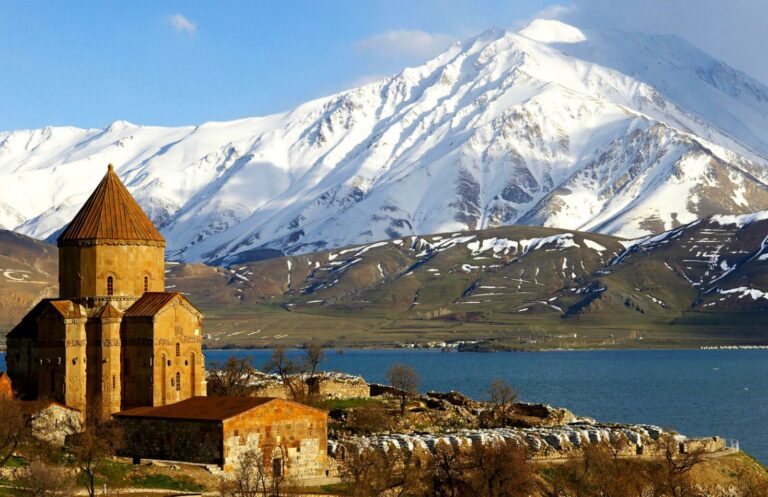
Van Lake – Placid and solemn, spread out bet ween the mountains, more a sea than a lake, the clouds just brush its surface. These waters are witness to time eternal, a millennial observer of the region and its history…

Many tourists

“So many tourists used to come here that the hotels couldnt  accommodate them all. Beds would be set up in lobbies, homes would be turned into guest houses, and some hotel staff would even invite guests to stay at their own homes” Every citizen of Van, over the age of 35, starts their recolection of the “Glorious Paste” with these words. Not so long ago, only 20 years, as many as 150,000 tourists visited the area every year, and tales of this fairy tale period are passed on to new generations.

Van Lake – Then, capsized by terrorism, life in Van and the surrounding region was pushed into a dark-age. For years Van became the silent heart of an “off limits” area for domestic and foreign tourists. Now, many years later, the lake and region have become safe once again, and tourists; (todays 20-somethings who have listened to the travellers tales of their elders) have begun to appear again.

But, even though the 15 000 tourists who visited this year are a drop in the ocean when compared to years past, they brought great hope to the region. There is joy that tourists are once again wandering the citys streets; filling the hotels and visiting the shops and ruins. Happily, many Turks are included in the swell of tourists. With sights to make postcards lacklustre and enough historical sites to exhaust historians, the Van region deserves even more interest. Lets wish the province a speedy return to the status it deserves and move on to reflect on the bright blue waters of Lake Van and its surrounding countryside.

Evening at Van Castle…

Van, known in ancient times as “Tuspa ”, has a history stretching back some 7 000 years; beginning with the Hurri and then Urartu peoples. Developed great civilisations which left countless gifts of history. Without doubt the most magnificent of these is Tuspa or Van Castle built in 855 BC by order of the Urartu King Sardon I. It holds the first written Urartian document; engraved in Assyrian, on the Madir Bulwark and describing the construction of the fortress. Built of limestone rock and covering 1,800 metres, the castle was restored during the Ottoman period.

Another of the Urartian wonders are the still operable water channels, known as Samran. Known to be Urartus administrative and entertainment centre, (iavu§tepe (Sardonihinli) is located 24 kilometres outside the city. If you visit the site, we re-commend that you meet Mehmet Kusman, custodian for 38 years, at 63 years old and with only a middle school education, Kusman can read and write cuneiform as if it was his mother tongue. Also, don £ pass up the chance of a guided tour, enriched with interesting tales, from one of Kusmans sons, Ensara (20) or Ersin (17).

Rising above the Hosap River, the Hosap Castle is known to be an Urartian, bit was given a new form by the Ottomans in the 17th century. The castle takes your breath away with its cylindrical shape and birds-eye view. The Seven Churches. Old Vans Husrev Pasa, Kaya Ceiebi, the Mosques of Suleyman Khan, the Van Muse-um, mausoleums, caravanserais and bridges built by the Urartians, the Seljuks and the Ottomans, pile historical sites, each more splendid than the other, on top of each other.

A sea and 400 kilometres of coastline…

With a surface area of 3 765 square kilometres, a width of 125 kilometres, a length of 60 kilometres and a coastline of 400 ki-lometres, Lake Van really deserves to be called a sea rather than a lake. Lake Vans islands, coastline and spotless beaches remind you of the sea. A modern highway skirts the edges of the lake from Van in the east, to Bitiis in the west, and takes you through beautiful coastal countryside. The Lakes two largest islands, Akdamar and (Jarpanak, with their natural beauty and churches, are popular with visitors. To the south-west of Van. past the coastal hotels and motels in Edremit, you arrive in Geras County.

From here you can board a motorboat to Akdamar and enjoy yourself on the trip. The intricate stone carvings of Akdamar Church, on Akdamar Island, dazzle the eye. Dating from the 1 Oth century, it is a place of pilgrimage for Armenians. The Armenian church on Carpanak Island dates from the 9th century, and the islands charm is added to by the large migration of birds during the Summer. At this time, it becomes a bird watchers paradise.

Make sure not to miss the historical Seljuk graves around the Halime Hatun Dome in Gevas (if Seljuk graves are of special in-terest, you should visit the spectacular grave at Ahlat). During the Summer, you can swim, sunbathe or have a picnic on Edremit and Gevass beautiful beaches.

The road through Gevas occasionally weaves between the mountains, and you pass into the province of Bitlis. One of the most important counties of Bitlis, Tatvan, is sure to be a favorite for tourists, and if you wish to enjoy a trip on the water, just jump onto one of the ferries for a pleasant six hour trip across the lake from Tatvan to Van.

Read More about Beglik Tash Tour

Street Markets of Istanbul

0

Street markets (pazar) still create a good alternative for economical shopping. People who generally do their shopping at various stores get astonished when they somehow come across with the prices in street markets located at different neigbourhoods on specific days of the week. The street markets at Ulus on Thursdays, YeSilkoy on Wednesdays,

Kadikoy on Tuesdays are the most popular ones. You can buy the garments of the latest fashion at a reasonable price range. Besides you can meet your needs ranging from clothes to kitchenery, bags and decorative furniture in the street markets at Fatih on Wednesdays, BeSiktaS on Saturdays and Fmdikzade on Fridays. Street markets promise a few hours full of joy and nostalgia for remembering the acquint smell of that enthusiastic and colourful crowd, as well as an economical shopping.

Which Pazar, where, when?

Cuma Pazan Fidikzade Friday

Cuma Pazari Usktudar Friday

Cumartesi Pazari Bakirkoy Saturday

Cumartesi Pazari Besiktas Saturday

Bostanci Pazari Bostanci Wednesday

Carsamba Pazari Fatih Wednesday

Yesilkoy Pazari Yesilkoy Wednesday

Carsamba Pazari Ihlamur Wednesday

Pazar Pazari Kucukcekmece Sunday

Pazartesi Pazan Bahcelievler Monday

Persembe Pazari Etiler Thursday

Persembe Pazari Merter Thursday

Persembe Pazari Erenkoy Thursday

Persembe Pazari Ulus Thursday

Persembe Pazari Suadiye Thursday

Sail Pazan Kadikoy/Sogutlucesme Tuesday

 Istanbul that accustomed to “the universal culture”

The come and goes of the most famous artists of the world are no longer “sensational events” for the people of Istanbul; because Istanbul has a determining role in I “the universal culture circulation.”

Not so long, some 20-25 years ago, Istanbul used to be all over the place when a foreign artist came. This famous guest used to be the focus of the public opinion. All the columns and cameras used to be directed to that person. Even the most serious columnists could not help mentioning “the sensational visit.”

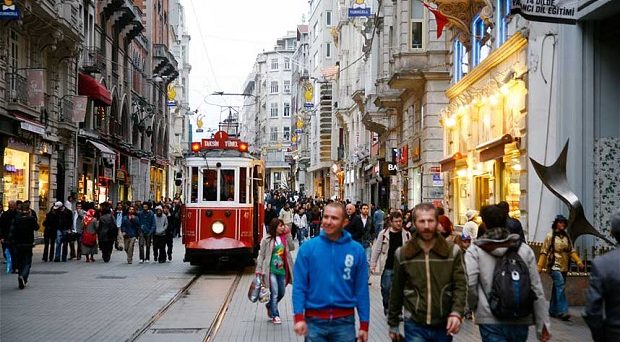
It has changed now. The visits of the most popular, the most distinguished, the most famous singers, stars and groups are simply not much “sensational” for Istanbul. Because, Istanbul has taken its place among “the main cultural capitals” of the world such as Paris, Rome, New York, Vienna and London, Istanbul, with its cultural/historical/natural riches that the whole humanity admires, is “an open air museum.” Its giant surface area and population, whether they want or not, is taking Istanbul next to the main megapouses of the world. With all these “plus” and minus” qualities,

Istanbul is certainly a “world city” and “city of culture” today…

The population of Istanbul is a very interesting mosaic. People from all social groups are represented in this city. The immigration rush from all parts of Turkey has brought Istanbul to be “the synthesis of this country.” It is hard to say that “the education and culture level” is at the same level with western cities, in the demography. But the “intelligentsia” of is strong enough to be dominant in the cultural life of the city. Or, “the intellectuals of Istanbul” are not only in “artliterature areas”, they are represented in many areas. For instance, most of “the businessmen at the top” are the active elements of this “intelligentsia.” Istanbul is organizing most of the festivals that has universal prestige owing to their efforts.

Besides, Istanbul has gained many of the cultural complexes that evoke admiration by the “culture and art foundations” they established. Briefly; The very strong “intelectual consensus” of Istanbul in terms of quality has accomplished the mission to take this city among “the universal culture capitals” with a great success, Istanbul has taken its place among “the world cities that could assimilated universal culture” despite of its mixed demographic structure by the efforts of its intellectuals.

Read More about Van Lake

The incomplete mesnevi of four thousand couplets titled

0

“Cihad-i Sultan Suleyman ber Iklim-i Rumili” whose poet is unknown according to the records and catalogues actually belongs to Levhi Efendi. It is about the Hungarian, Belgrade and Rhodes conquests.

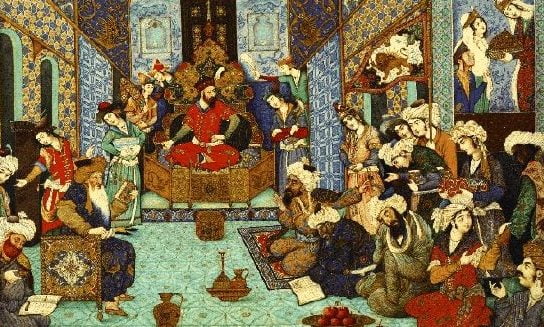
Mahu mentioned in one of his works that he wrote a mesnevi called “Sehname-yi Humayun” of seven thousand couplets. Ahdi confirmed the existence of Mahfis “Seh-name” in his works, too. Mahremis “Suleymanname” consists of ten thousand couplets. It is about the period between Suleymans ascent to the throne and his campaign to Baghdad.

Beyazid II

The same poet wrote a second mesnevi about the campaigns and conquests of Beyazid II. “Fetihname-i Sefer-i Zigetvar” was written by a poet called Merahi. This mesnevi by Merahi which includes eulogies for Suleyman the Lawgiver and Sokullu Mehmed Pasha is the story of the last battle campaign of Suleyman the Lawgiver, Zigatvar (974/1566). Another very long mesnevi of four thousand five hundred couplets on Suleyman the Lawgiver was written by Senai. A copy of it, inlaid with gold, was made in 947/1540.

Feth-i Kala-i Nova” (The conquest of the Castle Nova) is one of the mesnevis of the second group of historical ones which tell us about various-significant personalities around the Lawgiver Sultan, fighting and endeavoring for him and for the empire.

Nova Castle

“Feth-i Kala-i Nova” is about the conquest of Nova Castle under the high command of Barbarossa Hayr-eddin Pasha in 946/1539. The same poet, Muradi, wrote another mesnevi about the battles of Barbarossa (died 953/ 1546) and his brother Oruc Reis called “Fetihname-i Hayr-eddin Pasha.” Written in 930/1524, this mesnevi is made up of ten thousand couplets.

“Fetihname-i Kala-i Cerbe” written and completed in 967/1560 by Nidai is about the victory won by the navy of the Ottoman Empire on the North African coast against the Christian fleets.

As far as we know, the poet of the mesnevi written on the adventures of Suleymans great sea commander Si-nan Pasha was Galatali Hayreddin Celebi (died 980/1573) whose penname was Nigari. This poem tells us about the victory Sinan Pasha (died 961/1554) won over the Spanish Armada during the conquest of Trablus Garb. Also, “Luc-cetul-Ahyar”by Yetimi (died 960/1552) is about the battles of Barbarossa and his brother Oruc Reis.

Read More about Balkan Tours 2018