Home Blog Page 16

A Wagner Matinee part 4

0

The matinee audience was made up chiefly of women. One lost the contour of faces and figures, indeed any effect of line whatever, and there was only the color of bodices past counting, the shimmer of fabrics soft and fine, silky and sheer; red, mauve, pink, blue, lilac, purple, ticru, rose, yellow, cream, and white, all the colors that an impressionist finds in a sunlit landscape, with here and there the dead shadow of a frock coat. My Aunt Georgiana regarded them as though they had been so many daubs of tube-paint on a palette.

Old Maggie

When the musicians came out and took their places, she gave a little stir of anticipation, and looked with quickening interest down over the rail at that invariable grouping, perhaps the first wholly familiar thing that had greeted her eye since she had left old Maggie and her weakling calf. I could feel how all those details sank into her soul, for I had not forgotten how they had sunk into mine when I came fresh from plowing forever and forever between green aisles of corn, where, as in a treadmill, one might walk from daybreak to dusk without perceiving a shadow of change.

The clean profiles of the musicians, the gloss of their linen, the dull black of their coats, the beloved shapes of the instruments, the patches of yellow light on the smooth, varnished bellies of the cellos and the bass viols in the rear, the restless, wind- tossed forest of fiddle necks and bows I recalled how, in the first orchestra I ever heard, those long bow-strokes seemed to draw the heart out of me, as a conjurers stick reels out yards of paper ribbon from a hat.

The first number was the Tannhauser overture. When the horns drew out the first strain of the “Pilgrims Chorus,” Aunt Georgiana clutched my coat sleeve.

Then it was I first realized that for her this broke u silence of thirty years. With the battle between the two motives, with the frenzy of the Venusberg theme and its rippings of strings, there came to me an overwhelming sense of the waste and wear we are so power-less to combat; and I saw again the tall, naked house on the prairie, black and grim as a wooden fortress; the black pond where I had learned to swim, its margin pitted with sun-dried cattle tracks; the rain gullied clay banks about the naked house, the four dwarf ash seedlings where the dish-cloths were always hung to dry before the kitchen door.

The world there was the flat world of the ancients; to the east, a cornfield that stretched to daybreak; to the west, a corral that reached to sunset; between, the conquests of peace, dearer-bought than those of war.

Read More about The First Crusade part 26
A Wagner Matinee part 3

0

When my aunt appeared on the morning after her arrival in Boston, she was still in a semi-somnambulant state. She seemed not to realize that she was in the city where she had spent her youth, the place longed for hungrily half a lifetime. She had been so wretchedly train-sick throughout the journey that she had no recollection of anything but her discomfort, and, to all intents and purposes, there were but a few hours of nightmare between the farm in Red Willow County and my study on Newbury Street.

I had planned a little pleasure for her that afternoon, to repay her for some of the glorious moments she had given me when we used to milk together in the straw-thatched cowshed and she, because I was more than usually tired, or because her husband had spoken sharply to me, would tell me of the splendid performance of the Huguenots she had seen in Paris, in her youth.

Symphony Orchestra

At two oclock the Symphony Orchestra was to give a Wagner program, and I intended to take my aunt; though, as I conversed with her,
I grew doubtful about her enjoyment of it. I suggested our visiting the Conservatory and the Common before lunch, “but she seemed altogether too timid to wish to venture out.

She questioned me absently about various changes in the city, but she was chiefly concerned that she had forgotten to leave instructions about feeding half-skimmed milk to a certain weakling calf, “old Maggies calf, you know, Clark,” she explained, evidently having forgotten how long I had been away. She was further troubled because she had neglected to tell her daughter about the freshly opened kit of mackerel in the cellar, which would spoil if it were not used directly.

I asked her whether she had ever heard any of the Wagnerian operas, and found that she had not, though she was perfectly familiar with their respective situations, and had once possessed the piano score of The Flying Dutchman. I began to think it would be best to get her back to Red Willow County without waking her, and regretted having suggested the concert.

From the time we entered the concert hall, however, she was a trifle less passive and inert, and for the first time seemed to perceive her surroundings. I had felt some trepidation lest she might become aware of her queer country clothes, or might experience some painful embarrassment at stepping suddenly into the world to which she had been dead for a quarter of a century.

But, again, I found how superficially I had judged her. She sat looking about her with eyes as impersonal, almost as stony, as those with which the granite Rameses in a museum watches the froth and fret that ebbs and flows about his pedestal. I have seen this same aloofness in old miners who drift into the Brown hotel at Denver, their pockets full of bullion, their linen soiled, their haggard faces unshaven; standing in the thronged corridors as solitary as though they were still in a frozen camp on the Yukon.

Read More about Tour Packages Bulgaria

A Wagner Matinee part 2

0

Whatever shock Mrs. Springer experienced at my aunts appearance, she considerately concealed. As for myself, I saw my aunts battered figure with that feeling of awe and respect with which we behold explorers who have left their ears and fingers north of Franz- Joseph Land or their health somewhere along the Upper Congo.

My Aunt Georgiana had been a music teacher at the Boston Conservatory, somewhere back in the later sixties. One summer, while visiting in the little village among the Green Mountains where her ancestors had dwelt for generations, she had kindled the callow fancy of my uncle, Howard Carpenter, then an idle, shiftless boy of twenty-one. When she returned to her duties in Boston, Howard followed her, and the upshot of this infatuation was that she eloped with him, eluding the reproaches of her family and the criticism of her friends by going with him to the Nebraska frontier.

Carpenter

Carpenter, who, of course, had no money, took up a homestead in Red Willow County, fifty miles from the railroad. There they had measured off their land themselves, driving across the prairie in a wagon, to the wheel of which they had tied a red cotton hand-kerchief, and counting its revolutions. They built a dugout in the red hillside, one of those cave dwellings whose inmates so often reverted to primitive conditions. Their water they got from the lagoons where the buffalo drank, and their slender stock of provisions was always at the mercy of roving Indians. For thirty years my aunt had not been farther than fifty miles from the homestead.

I owed to this woman most of the good that ever came my way in my boyhood, and had a reverential affection for her. During the yeant when I was riding here for my uncle, my aunt, after cooking the three : meals the first of which was ready at six oclock in the morning and putting the six children to bed, would often stand until midnight at her ironing-board, with me at the kitchen table beside her, hearing me recite Latin declensions and conjugations, gently shaking me when my drowsy head sank down over a page of irregular verbs.

It was to her, at her ironing or mending, that I read my first Shakespeare, and her old textbook on mythology was the first that ever came into my empty hands. She taught me my scales and exercises on the little parlor organ which her husband had bought her after fifteen years during which she had not so much as seen a musical instrument. She would sit beside me by the hour, darning and counting, while I struggled with the “Joyous Farmer.” She seldom talked to me about music, and I understood why. Once when I had been doggedly beating out some easy passages from an old score of Euryanthe I had found among her music books, she came up to me and, putting her hands over my eyes, gently drew my head back upon her shoulder, saying tremulously, “Dont love it so well, Clark, or it may be taken from you.”

Read More about The First Crusade part 25

A Wagner Matinee part 1

0

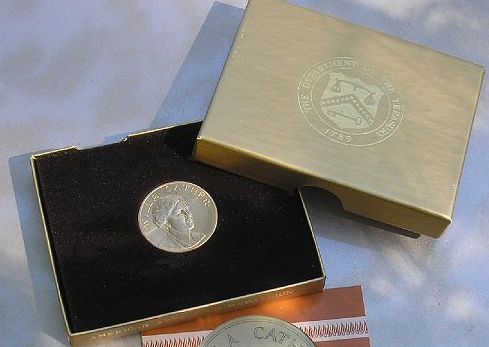
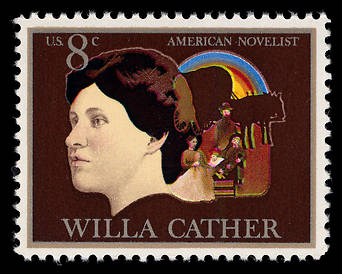
Willa Gather (1876-1947)

Willa Sibert Cather was born at Winchester, Va., in 1876. She was for some years engaged in newspaper work, and was until 1912 associate editor of McClures Magazine. Her novels, My Antonia and A Lost Lady, are among the best modern American fiction. In Jier volume Touth and the Bright Medusa she offers a variety of well-written short stories. Miss Cather described with honesty and power the characters and scenes she knew and understood.

A Wagner Matinee is reprinted from Youth and the Bright Medusa. Copyright, 1920, by Alfred A. Knopf, New York, and William Heinemann, London, by whose permission it is here used.

A Wagner Matinee

I received one morning a letter, written in pale ink on glossy blue-lined note-paper, and bearing the postmark of a little Nebraska village. This communication, worn and rubbed, looking as if it had been carried for some days in a coat pocket that was none too clean, was from my Uncle Howard, and informed me that his wife had been left a small legacy by a bachelor relative, and that it would be necessary for her to go to Boston to attend the settling of the estate. He requested me to meet her at the station and render her whatever services might be necessary. On examining the date indicated as that of her arrival, I found it to be no later than to-morrow. He had characteristically delayed writing until, had I been away from home for a day, I must have missed my aunt altogether.

The name of my Aunt Georgiana opened before me a gulf of recollection so wide and deep that, as the letter dropped from my hand, I felt suddenly a stranger to all the present conditions of my existence, wholly ill at ease and out of place amid the familiar surroundings of my study. I became, in short, the gangling farm-boy my aunt had known, scourged with chilblains and bashfulness, my hands cracked and sore from the corn husking. I sat again before her parlor organ fumbling the scales with my stiff red fingers, while she, beside me, made canvas mittens for the huskers.

The next morning, after preparing my landlady for a visitor, I set out for the station. When the train arrived. I had some difficulty in finding my aunt. She was the last of the passengers to alight, and it was not until I got her into the carriage that she seeemed really to recognize me. She had come all the way in a day coach; her linen duster had become black with soot and her black bonnet gray with dust during the journey. When we arrived at my boarding house the landlady put her to bed at once and I did not see her again until the next morning.

Read More about Cavalleria Rusticana part 6

Mrs Bullfrog Part 6

0

“Mr. Bullfrog,” said she, not unkindly, yet with all the decision of her strong character, “let me advise you to overcome this foolish weakness and prove yourself to the best of your ability as good a husband as I will be a wife. You have discovered, perhaps, some little imperfections in your bride. Well, what did you expect? Women are not angels’ if they were, they would go to heaven for husbands—or, at least, be more difficult in their choice on earth.”

“But why conceal those imperfections?” interposed I, tremulously.

“Now, my love, are not you a most unreasonable little man?” said Mrs. Bullfrog, patting me on the cheek. “Ought a woman to disclose her frailties earlier than the wedding-day? Few husbands, I assure you, make the discovery in such good season, and still fewer complain that these trifles are concealed too long. Well, what a strange man you are! Poh! you are joking.”

“But the suit for breach of promise!” groaned I.

Exclaimed my wife

“Ah! and is that the rub?” exclaimed my wife. “Is it possible that you view that affair in an objectionable light? Mr. Bullfrog, I never could have dreamed it. Is it an objection that I have triumphantly defended myself against slander and vindicated my purity in a court of justice? Or do you complain because your wife has shown the proper spirit of a woman, and punished the villain who trifled with her affections?”

“But,” persisted I, shrinking into a corner of the coach, however, for I did not know precisely how much contradiction the proper spirit of a woman would endure “but, my love, would it not have been more dignified to treat the villain with the silent contempt he merited?” “That is all very well, Mr. Bullfrog,” said my wife, slyly, “but in that case where would have been the five thousand dollars which are to stock your dry goods store?”

“Mrs. Bullfrog, upon your honor,” demanded I, as if my life hung upon her words, “is there no mistake about those five thousand dollars?” “Upon my word and honor, there is none,” replied she. “The jury gave me every cent the rascal had, and I have kept it all for my dear Bullfrog.”

“Then, thou dear woman,” cried I, with an overwhelming gush of tenderness, “let me fold thee to my heart! The basis of matrimonial bliss is secure, and all thy little defects and frailties are forgiven. Nay, since the result has been so fortunate, I rejoice at the wrongs which drove thee to this blessed lawsuit, happy Bullfrog that I am!”

Read More about Isaac Comnenus 11

Mrs Bullfrog Part 5

0

Of course this query could have no reference to my situation; yet, unreasonable as it may appear, I confess that my feelings were not altogether so ecstatic as when I first called Mrs. Bullfrog mine. True, she was a sweet woman and an angel of a wife; but what if a gorgon should return amid the transports of our connubial bliss and take the angels place!

I recollected the tale of a fairy who half the time was a beautiful woman and half the time a hideous monster. Had I taken that very fairy to be the wife of my bosom? While such whims and chimeras were flitting across my fancy I began to look askance at Mrs. Bullfrog, almost expecting that the transformation would be wrought before my eyes.

Bottle of Kalydor

To divert my mind I took up the newspaper which had covered the little basket of refreshments, and which now lay at the bottom of the coach blushing with a deep-red stain and emitting a potent spirituous fume from the contents of the broken bottle of Kalydor. The paper was two or three years old, but contained an article of several columns in which I soon grew wonderfully interested.

It was the report of a trial for breach of promise of marriage, giving the testimony in full, with fervid extracts from both the gentlemans and ladys amatory correspondence. The deserted damsel had personally appeared in court, and had borne energetic evidence to her lovers perfidy and the strength of her blighted affections. On the defendants part, there had been an attempt, though insufficiently sustained, to blast the plaintiffs character, and a plea, in mitigation of damages, on account of her unamiable temper. A horrible idea was suggested by the ladys name.

“Madam,” said I, holding the newspaper before Mrs. Bullfrogs eyes —and, though a small, delicate and thin-visage man, I feel assured that I looked very terrific—“Madam,” repeated I, through my shut teeth, “were you the plaintiff in this cause?”

“Oh, my dear Mr. Bullfrog!” replied my wife, sweetly; “I thought all the world knew that.”

“Horror! horror!” exclaimed I, sinking back on the seat.

Covering my face with both hands, I emitted a deep and deathlike groan, as if my tormented soul were rending me asunder. I, the most exquisitely fastidious of men, and whose wife was to have been the most delicate and refined of women, with all the fresh dewdrops glittering on her virgin rosebud of a heart! I thought of the glossy ringlets and pearly teeth, I thought of the Kalydor, I thought of the coachmans bruised ear and bloody nose, I thought of the tender love-secrets which she had whispered to the judge and jury, and a thousand tittering auditors, and gave another groan.

“Mr. Bullfrog!” said my wife.

As I made no reply, she gently took my hands within her own, removed them from my face and fixed her eyes steadfastly on mine.

Read More about The First Crusade part 27

Mrs Bullfrog Part 4

0

“Come, sir! bestir yourself! Help this rascal to set up the coach,” said the hobgoblin to me; then, with a terrific screech to three countrymen at a distance, “Here, you fellows! Aint you ashamed to stand off when a poor woman is in distress?”

The countrymen, instead of fleeing for their lives, came running at full speed, and laid hold of the topsy-turvy coach. I also, though a small sized man, went to work like a son of Anak. The coachman, too, with the blood still streaming from his nose, tugged and toiled most manfully, dreading, doubtless, that the next blow might break his head. And yet, be mauled as the poor fellow had been, he seemed to glance at me with an eye of pity, as if my case were more deplorable than his. But I cherished a hope that all would turn out a dream, and seized the opportunity, as we raised the coach, to jam two” of my fingers under the wheel, trusting that the pain would awaken me.

“Why, here we are all to rights again!” exclaimed a sweet voice, behind. “Thank you for your assistance, gentlemen.—My dear Mr. Bullfrog, how you perspire! Do let me wipe your face.—Dont take this little accident too much to heart, good driver. We ought to be thankful that none of our necks are broken!”

“We might have spared one neck out of the three,” muttered the driver, rubbing his ear and pulling his nose, to ascertain whether he had been cuffed or not. “Why, the womans a witch!”

Riding habit

I fear that the reader will not believe, yet it is positively a fact, that there stood Mrs. Bullfrog with her glossy ringlets, curling on her brow and two rows of Orient pearls gleaming between her parted lips, which wore k most angelic smile. She had regained her riding-habit and calash from the grisly phantom, and was in all respects the lovely woman who had been sitting by my side at the instant of our overturn. How she had happened to disappear, and who had supplied her place, and whence she did now return, were problems too knotty for me to solve.

There stood my wife: that was the one thing certain ^mong a heap of mysteries. Nothing remained but to help her into the coach and plod on through the journey of the day and the journey of life as comfortably as we could. As the driver closed the door upon us I heard him whisper to the three countrymen.

“How do you suppose a fellow feels shut up in the cage with a she- tiger?”

Read More about Cavalleria Rusticana part 2

Mrs Bullfrog Part 3

0

This was spoken in a more decided tone than I had happened to hear until then from my gentlest of all gentle brides. At the same time she put up her hand and took mine prisoner, but merely drew it away from the forbidden ringlet, and then immediately released it. Now, I am a fidgety little man and always love to have something in my fingers; so that, being debarred from my wifes curls, I looked about me for any other plaything. On the front seat of the coach there was one of those small baskets in which travelling ladies who are too delicate to appear at a public table generally carry a supply of gingerbread, biscuits and cheese, cold ham, and other light refreshments, merely to sustain nature to the journeys end. Such airy diet will sometimes keep them in pretty good flesh for a week together. Laying hold of this same little basket, I thrust my hand under the newspaper with which it was carefully covered.

“Whats this, my dear?” cried I, for the black neck of a bottle had popped out of the basket.

“A bottle of Kalydor, Mr. Bullfrog,” said my wife, coolly taking the basket from my hands and replacing it on the front seat.

Possibility of doubting

There was no possibility of doubting my wifes word, but I never knew genuine Kalydor such as I use for my own complexion to smell so much like cherry-brandy. I was about to express my fears that the lotion would injure her skin, when an accident occurred which threatened more than a skin-deep injury. Our Jehu had carelessly driven over a heap of gravel and fairly capsized the coach, with the wheels in the air and our heels where our heads should have been. What became of my wits I cannot imagine: they have always had a perverse trick of deserting me just when they were most needed; but so it chanced that in the confusion of our overthrow I quite forgot that there was a Mrs. Bullfrog in the world. Like many mens wives, the good lady served her husband as a stepping-stone. I had scrambled out of the coach and was instinctively settling my cravat, when somebody brushed roughly by me and I heard a smart thwack upon the coachmans ear.

“Take that, you villain!” cried a strange, hoarse voice. “You have ruined me, you blackguard! I shall never be the woman I have been.”

And then came a second thwack, aimed at the drivers other ear, but which missed it and hit him on the nose, causing a terrible effusion of blood. Now, who or what fearful apparition was inflicting this punishment on the poor fellow remained an impenetrable mystery to me. The blows were given by a person of grisly aspect with a head almost bald and sunken cheeks, apparently of the feminine gender, though hardly to be classed in the gentler sex. There being no teeth to modulate the voice, it had a mumbled fierceness—not passionate, but stern —which absolutely made me quiver like calves-foot jelly.

Who could the phantom be? The most awful circumstance of the affair is yet to be told, for this ogre or whatever it was had a riding-habit like Mrs. Bullfrogs, and also a green silk calash dangling down her back by the strings. In my terror and turmoil of mind I could imagine nothing less than that the Old Nick at the moment of our overturn had annihilated my wife and jumped into her petticoats. This idea seemed the more probable since I could nowhere perceive Mrs. Bullfrog alive, nor, though I looked very sharp about the coach, could I detect any traces of that beloved womans dead body. There wouldnt have been a comfort in giving her Christian burial.

Read More about Silence part 11

Mrs Bullfrog Part 2

0

Besides the fundamental principle already hinted at, I demanded the fresh bloom of youth, pearly teeth, glossy ringlets, and the whole list of lovely items, with the utmost delicacy of habits and sentiments, a silken texture of mind, and, above all, a virgin heart. In a word, if a young angel just from Paradise, yet dressed in earthly fashion, had come and offered me her hand, it is by no means certain that I should have taken it. There was every chance of my becoming a most miserable old bachelor, when by the best luck in the world I made a journey into another State, and was smitten by and smote again, and wooed, won and married the present Mrs. Bullfrog, all in the space of a fortnight.

Owing to these extempore measures, I not only gave my bride credit for certain perfections which have not as yet come to light, but also overlooked a few trifling defects, which, however, glimmered on my perception long before the close of the honeymoon. Yet, as there was no mistake about the fundamental principle aforesaidJI soon learned, as will be seen, to estimate Mrs. Bullfrogs deficiencies and superfluities at exactly their proper value.

My bride

The same morning that Mrs. Bullfrog and I came together as a unit we took two seats in the stage-coach and began our journey toward my place of business. There being no other passengers, we were as much alone and as free to give vent to our raptures as if I had hired a hack for the matrimonial jaunt.

My bride looked charming in a green silk calash and riding-habit of pelisse cloth; and whenever her red lips parted with a smile, each tooth appeared like an inestimable pearl. Such was my passionate warmth that—we had rattled out of the village, gentle reader, and were lonely as Adam and Eve in Paradise I plead guilty to no less freedom than a kiss. The gentle eye of Mrs. Bullfrog scarcely rebuked me for the profanation. Emboldened by her indulgence, I threw back the calash from her polished brow and suffered my fingers, white and delicate as her own, to stray among those dark and glossy curls which realized my daydreams of rich hair.

“My love,” said Mrs. Bullfrog, tenderly, “you will disarrange my curls.”
“Oh, no, my sweet Laura,” replied I, still playing with the-glossy ringlets. “Even your fair hand could not manage a curl more delicately than mine. I propose myself the pleasure of doing up your hair in papers every evening at the same time with my own.”

“Mr. Bullfrog,” repeated she, “you must not disarrange my curls.”

Read More about The First Crusade part 19

Mrs Bullfrog Part 1

0

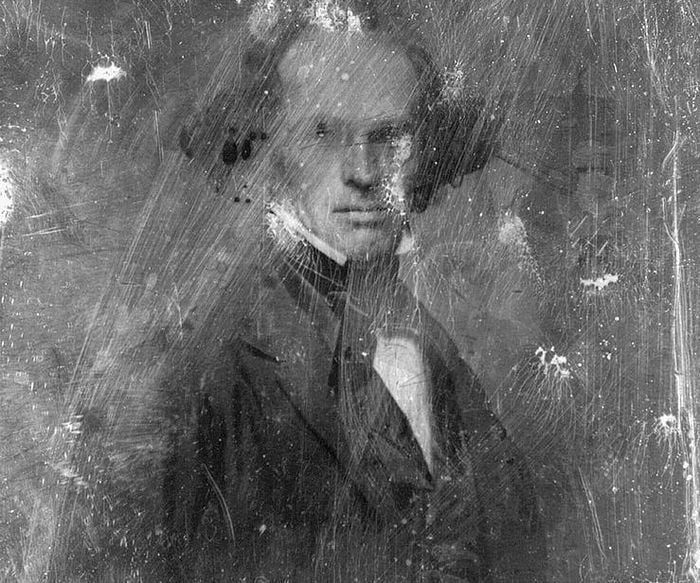
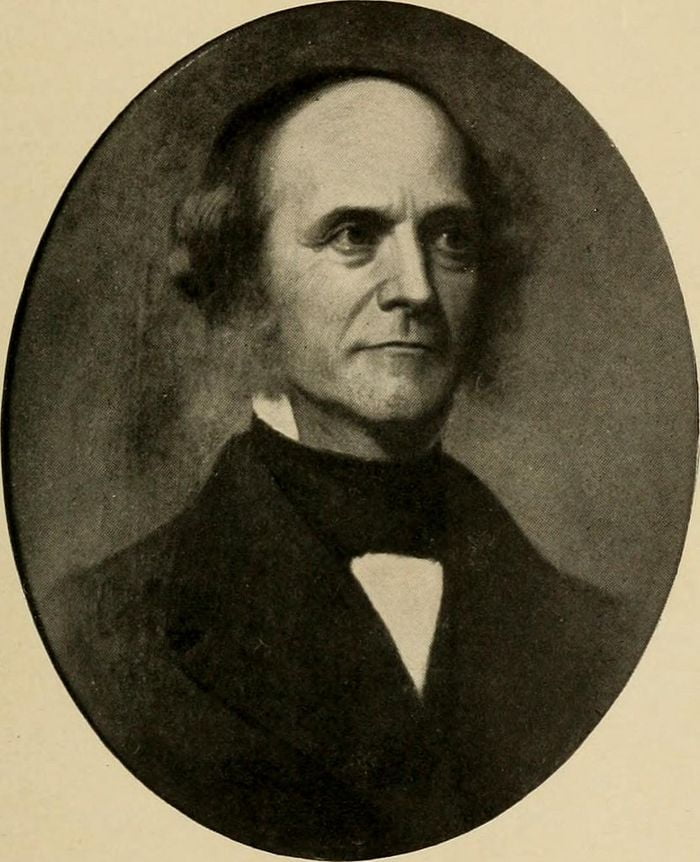
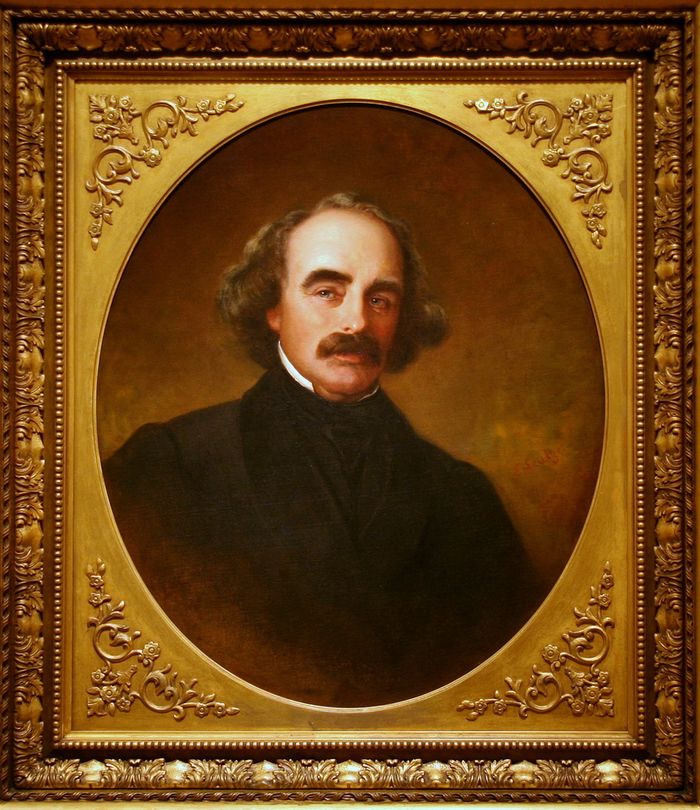
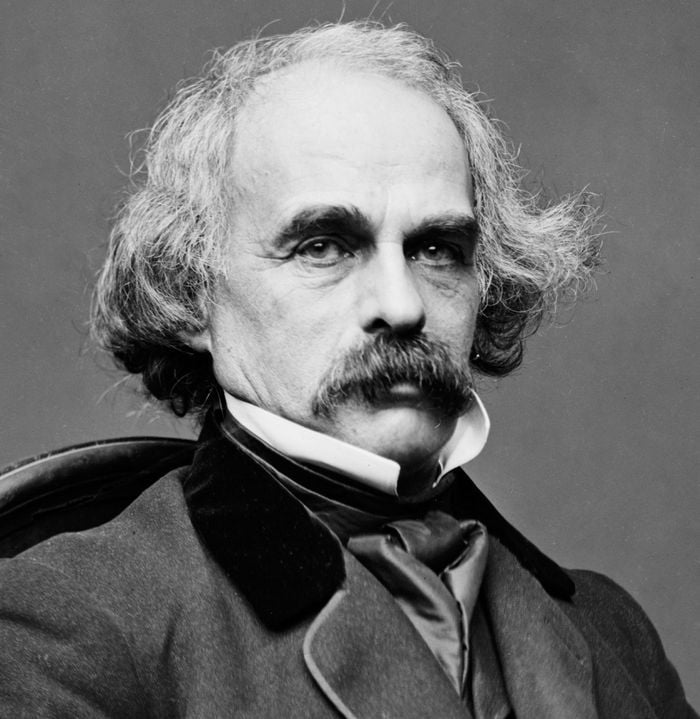
Nathaniel Hawthorne (1804 – 1864)

Hawthorne was born at Salem, Mass., in 1804. He came of an old Puritan family, and to the end of his life was influenced by his early environment and his New England temperamental heritage. Before he went abroad as consul for the American government he had written a number of stories and sketches of New England life, and in 1850 had won many readers and considerable fame with his novel, The Scarlet Letter. Hawthornes stories, which are essentially American in subject matter, are among the masterpieces of our literature of fiction. Hawthorne understood, as few others have done, the limitations and the possibilities of the form.

Mrs. Bullfrog is one of his most delightful tales. It is reprinted from Mosses from an Old Manse, 1837, by permission of Houghton Mifflin & Company.

Mrs. Bullfrog

From Mosses from an Old Manse

It makes me melancholy to see how like fools some very sensible people act in the matter of choosing wives. They perplex their judgments by a most undue attention to little niceties of personal appearance, habits, disposition, and other trifles which concern nobody but the lady herself. An unhappy gentleman resolving to wed nothing short of perfection keeps his heart and hand till both get so old and withered that no tolerable woman will accept them. Now, this is the very height of absurdity.

A kind Providence has so skillfully adapted sex to sex and the mass of individuals to each other that, with certain obvious exceptions, any male and female may be moderately happy in the married state. The true rule is to ascertain that the match is fundamentally a good one, and then to take it for granted that all minor objections, should there be such, will vanish if you let them alone. Only put yourself beyond hazard as to the real basis of matrimonial bliss, and it is scarcely to be imagined what miracles in the way of reconciling smaller incongruities connubial love will effect.

For my own part, I freely confess that in my bachelorship I was precisely such an over-curious simpleton as I now advise the reader not to be. My early habits had gifted me with a feminine sensibility and too exquisite refinement. I was the accomplished graduate of a dry-goods store where by dint of ministering to the whims of the fine ladies, and suiting silken hose to delicate limbs, and handling satins, ribbons, chintzes, calicoes, tapes, gauze and cambric needles, I grew up a very ladylike sort of a gentleman. It is not assuming too much to affirm that the ladies themselves were hardly so ladylike as Thomas Bullfrog. So painfully acute was my sense of female imperfection, and such varied excellence did I require in the woman whom I could love, that there was an awful risk of my getting no wife at all or of being driven to perpetrate matrimony with my own image in the looking glass.

Read More about Silence part 2