Home Blog Page 15

King Rhampsinitus and the Thief 2

0

King`s treasury

The daughter did as her father willed, whereon the thief, who was well aware of the kings motive, felt a desire to outdo him m craft and cunning. Accordingly he contrived the following plan. He procured the corpse of a man lately dead, and cutting off one of the arms at the shoulder, put it under his dress, and so went to the king s daughter.

When she put the question to him as she had done to all the rest, he replied that the wickedest thing he had ever done was cutting oil the head of his brother when he was caught in a trap in the king s treasury, and the cleverest was making the guards drunk and carrying ott the body. As he spoke, the princess caught at him, but the thief took advantage of the darkness to hold out to her the hand of the corpse. Imagining it to be his own hand, she seized and held it fast; while the thief, leaving it in her grasp, made his escape by the door.

The king, when word was brought him of this fresh success, amazed at the sagacity and boldness of the man, sent messengers to all the towns in his dominions to proclaim a free pardon for the thief, and to promise him a rich reward, if he came and made himself known.

The thief took the king at his word, and came boldly into his presence, whereupon Rhampsinitus, greatly admiring him, and looking on him as the most knowing of men, gave him his daughter marriage. Egyptians,” he said, “excelled all the rest of the world in wisdom, and this man excelled all other Egyptians.

The story has been taken from www.ensarislamoglu.com. Whole story can be read on link King Rhampsinitus and the Thief.

Read More about Pomorie Tours
The Long Exile part 7

0

Those who knew would not betray Makar Semyonich, knowing he would be flogged almost to death. At last the Governor turned to Aksionov whom he knew to be a just man, and said:

“You are a truthful old man; tell me, before God, who dug the hole?”
Makar Semyonich stood as if he were quite unconcerned, looking at the Governor and not so much as glancing at Aksionov. Aksionovs lips and hands trembled, and for a long time he could not utter a word. He thought, “Why should I screen him who ruined my life? Let him pay for what I have suffered. But if I tell, they will probably flog the life out of him, and maybe I suspect him wrongly. And, after all, what good would it be to me?”

“Well, old man,” repeated the Governor, “tell me the truth: who has been digging under the wall?”

Aksionov glanced at Makar Semyonich, and said, “I cannot say, your honor. It is not Gods will that I should tell! Do what you like with me; I am in your hands.”

However much the Governor tried, Aksionov would say no more, and so the matter had to be left.

Lying on bed

That night, when Aksionov was lying on his bed and just beginning to doze, some one came quietly and sat down on his bed. He peered through the darkness and recognized Makar.

“What more do you want of me?” asked Aksionov, “Why have you come here?”

Makar Semyonich was silent. So Aksionov sat up and said, “What do you want? Go away, or I will call the guard!”

Makar Semyonich bent close over Aksionov, and whispered, “Ivan Dmitrich, forgive me!”

“What for?” asked Aksionov.

“It was I who killed the merchant and hid the knife among your things. I meant to kill you too, but I heard a noise outside, so I hid the knife in your bag and escaped out of the window.”

Aksionov was silent, and did not know what to say. Makar Semyonich slid off the bed-shelf and knelt upon the ground. “Ivan Dmitrich,” said he, “forgive me! For the love of God, forgive me! I will confess that it was I who killed the merchant, and you will be released and can go to your home.”

“It is easy for you to talk,” said Aksionov, “but I have suffered for you these twenty-six years. Where could I go to now?… My wife is dead, and my children have forgotten me. I have nowhere to go…”

Makar Semyonich did not rise, but beat his head on the floor. “Ivan Dmitrich, forgive me!” he cried. “When they flogged me with the knout it was not so hard to bear as it is to see you now… yet you had pity on me, and did not tell. For Christs sake, forgive me, wretch that I am!” And he began to sob.

When Aksionov heard him sobbing he, too, began to weep.

“God will forgive you!” said he. “Maybe I am a hundred times worse than you.” And at these words his heart grew light, and the longing for home left him. He no longer had any desire to leave the prison, but only hoped for his last hour to come.

In spite of what Aksionov had said, Makar Semyonich confessed his Built. But when the order for his release came, Aksionov was already raid.

Read More about The First Crusade part 18

The Long Exile part 6

0

Then he saw his children, quite little, as they were at that time: one with a little cloak on, another at his mothers breast. And then he remembered himself as he used to be young and merry. He remembered how he sat playing the guitar in the porch of the inn where he was arrested, and how free from care he had been. He saw, in his mind, the place where he was flogged, the executioner, and the people standing mound; the chains, the convicts, all the twenty-six years of his prison life, and .his premature old age. The thought of it all made him so wretched that he was ready to kill himself.

“And its all that villains doing!” thought Aksionov. And his anger was so great against Makar Semyonich that he longed for vengeance, even if he himself should perish for it. He kept repeating prayers all night, but could get no peace. During the day he did not go near Makar Semyonich, nor even look at him.

A fortnight passed in this way. Aksionov could not sleep at night, and was so miserable that he did not know what to do.

Prisoners slept

One night as he was walking about the prison he noticed some earth that came rolling out from under one of the shelves on which the prisoners slept. He stopped to see what it was. Suddenky Malar Semyonich crept out from under the shelf, and looked up at Aksionov with frightened face. Aksionov tried to pass without looking at him, but Makar seized his hand and told him that he had dug a hole under the wall, getting rid of the earth by putting it into his high-boots, and emptying it out every day on the road when the prisoners were driven to their work.

“Just you keep quiet, old man, and you shall get out too. If you blab, theyll flog the life out of me, but I will kill you first.”

Aksionov trembled with anger as he looked at his enemy. He drew his hand away, saying, “I have no wish to escape, and you have no need to kill me; you killed me long ago! As to telling of you I may do so or not, as God shall direct.”

Next day, when the convicts were led out to work, the convoy soldiers noticed that one or other of the prisoners emptied some earth out of his boots. The prison was searched and the tunnel found. The Governor came and questioned all the prisoners to find out who had dug the hole. They all denied any knowledge of it.

Read More about Isaac Comnenus 40

The Long Exile part 5

0

“Where are you from?” asked some one.

“From Vladimir. My family are of that town. My name is Makar, and they also call me Semyonich.”

Aksionov raised his head and said: “Tell me, Semyonich, do you know anything of the merchants Aksionov of Vladimir? Are they still alive?”
“Know them? Of course I do. The Aksionovs are rich, though their father is in Siberia: a sinner like ourselves, it seems! As for you, Gran- dad, how did you come here?”

Aksionov did not like to speak of his misfortune. He only sighed, and said, “For my sins I have been in prison these twenty-six years.” “What sins?” asked Makar Semyonich.

But Aksionov only said, “Well, well I must have deserved it!” He would have said no more, but his companions told the newcomers how Aksionov came to be in Siberia; how some one had killed a merchant, and had put the knife among Aksionovs things, and Aksionov had been unjustly condemned.

Makar Semyonich

When Makar Semyonich heard this, he looked at Aksionov, slapped his own knee, and exclaimed, “Well, this is wonderful! Really wonderful! But how old youve grown, Grandad!”

The others asked him why he was so surprised, and where he had seen Aksionov before; but Makar Semyonich did not reply. He only said: “Its wonderful that we should meet here, lads!”

These words made Aksionov wonder whether this man knew who had killed the merchant; so he said, “Perhaps, Semyonich, you have heard of that affair, or maybe youve seen me before?”

“How could I help hearing? The worlds full of rumors. But its a long time ago, and Ive forgotten what I heard.”

“Perhaps you heard who killed the merchant?” asked Aksionov. Makar Semyonich laughed, and replied: “It must have been him in whose bag the knife was found! If some one else hid the knife there, ‘Hes not a thief till hes caught, as the saying is. How could any one put a knife into your bag while it was under your head? It would surely have woke you up.”
When Aksionov heard these words, he felt sure this was the man who hud killed the merchant. He rose and went away. All that night Aksionov lay awake. He felt terribly unhappy, and all sorts of images rose in his mind. There was the image of his wife as she was when he parted from her to go to the fair. He saw her as if she were present; her face and her eyes rose before him; he heard her speak and laugh.

Read More about Isaac Comnenus 12

The Long Exile part 4

0

And Aksionov wrote no more petitions; gave up all hope, and only prayed to God.

Aksionov was condemned to be flogged and sent to the mines. So he was flogged with a knout, and when the wounds made by the knout were healed, he was driven to Siberia with other convicts.

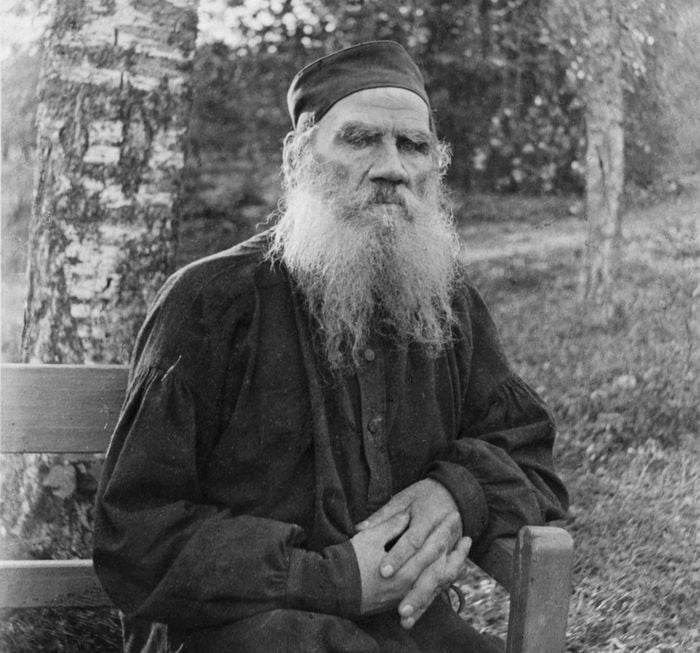
For twenty-six years Aksionov lived as a convict in Siberia. His hair turned white as snow, and his beard grew long, thin, and gray. All his mirth went; he stooped; he walked slowly, spoke little, and never laughed, but he often prayed.

Enough prison

In prison Aksionov learned to make boots, and earned a little money, with which he bought The Lives of the Saints. He read this book when there was light enough in the prison; and on Sundays in the prison- church he read the lessons and sang in the choir; for his voice was still good.

The prison authorities liked Aksionov for his meekness, and his fellow-prisoners respected him: they called him “Grandfather,” and “The Saint.” When they wanted to petition the prison authorities about anything, they always made Aksionov their spokesman, and when there were quarrels among the prisoners they came to him to put things right, and to judge the matter.

No news reached Aksionov from his home, and he did not even know if his wife and children were still alive.
One day a fresh gang of convicts came to the prison. In the evening the old prisoners collected round the new ones and asked them what towns or villages they came from, and what they were sentenced for. Among the rest Aksionov sat down near the newcomers, and listened with downcast air to what was said.

One of the new convicts, a tall, strong man of sixty, with a closely- cropped gray beard, was telling the others what he had been arrested for.

“Well, friends,” he said, “I only took a horse that was tied to a sledge, and I was arrested and accused of stealing. I said I had only taken it to get home quicker, and had then let it go; besides, the driver was a personal friend of mine.

So I said, Its all right. No, said they, you stole it. But how or where I stole it they could not say. I once really did something wrong, and ought by rights to have come here long ago, but that time I was not found out. Now I have been sent here for nothing at all. … Eh, but its lies Im telling you; Ive been to Siberia before, but I did not stay long.”

Read More about The First Crusade part 15

The Long Exile part 3

0

The police-officer ordered the soldiers to bind Aksionov and to put him in the cart. As they tied his feet together and flung him into the cart, Aksionov crossed himself and wept. His money and goods were taken from him, and he was sent to the nearest town and imprisoned there. Inquiries as to his character were made in Vladimir. The merchants and other inhabitants of that town said that in former days he used to drink and waste his time, but that he was a good man. Then the trial came on: he was charged with murdering a merchant from Ryazan, and robbing him of twenty thousand rubles.

His wife was in despair, and did not know what to believe. Her children were all quite small; one was a baby at her breast. Taking them all with her, she went to the town where her husband was in jail. At first she was not allowed to see him; but after much begging, she obtained permission from the officials, and was taken to him.

When he saw her husband in prison-dress and in chains, shut up with thieves and criminals, she fell down, and did not come to her senses for a long time. Then she drew her children to her, and sat down near him. She told him of things at home, and asked about what had happened to him. He told her all, and she asked, “What can we do now?”

“We must petition the Czar not to let an innocent man perish.”

His wife told him that she had sent a petition to the Czar, but it had not: been accepted.

Aksionov did not reply, but only looked downcast.

Remember

Then his wife said, “It was not for nothing I dreamt your hair had turned gray. You remember? You should not have started that day.” And passing her fingers through his hair, she said: “Vanya dearest, tell your wife the truth; was it not you who did it?”

“So you, too, suspect me!” said Aksionov, and, hiding his face in his hands, he began to weep. Then a soldier came to Say that the wife and children must go away; and Aksionov said good-bye to his family for the last time.

When they were gone, Aksionov recalled what had been said, and When he remembered that his wife also had suspected him, he said to himself, “It seems that only God can know the truth; it is to Him alone WC must appeal, and from Him alone expect mercy.”

Read More about The First Crusade part 22

The Long Exile part 2

0

When he had gone about twenty-five miles, he stopped for the horses to be fed. AJcsionov rested awhile in the passage of the inn, then he stepped out into the porch, and, ordering a samovar to be heated, got out his guitar and began to play.

Fellow Merchant

Suddenly a troika drove up with tinkling bells and an official alighted, followed by two soldiers. He came to Aksionov and began to question him asking him who he was and whence he came. Aksionov answered him, fully, and said, “Wont you have some tea with me?” But the official went on cross-questioning him and asking him, “Where did you spend last night? Were you alone, or with a fellow-merchant? Did you see the other merchant this morning? Why did you leave the inn before dawn?”

Aksionov wondered why he was asked all these questions, but he described all that had happened, and then added, “Why do you crossquestion me as if I were a thief or a robber? I am traveling on business of my own, and there is no need to question me.”

Then the official, calling the soldiers, said, “I am the police-officer of this district, and I question you because the merchant with whom you spent last night has been found with his throat cut. We must search your things.”

They entered the house. The soldiers and the police-officer unstrapped Aksionovs luggage and searched it. Suddenly the officer drew a knife out of a bag, crying, “Whose knife is this?”

Aksionov looked, and seeing a blood-stained knife taken from his bag, he was frightened.

“How is it there is blood on this knife?”

Aksionov tried to answer, but could hardly utter a word, and only stammered: “I dont know not mine.”

Then the police-officer said: “This morning the merchant was found in bed with his throat cut. You are the only person who could have done it. The house was locked from inside, and no one else was there. Here is this blood-stained knife in your bag, and your face and manner betray you! Tell me how you killed him, and how much money you stole?”

Aksionov swore he had not done it; that he had not seen the merchant after they had had tea together; that he had no money except eight thousand rubles of his own, and that the knife was not his. But his voice was broken, his face pale, and he trembled with fear as though he were guilty.

Read More about The First Crusade part 23

The Long Exile part 1

0

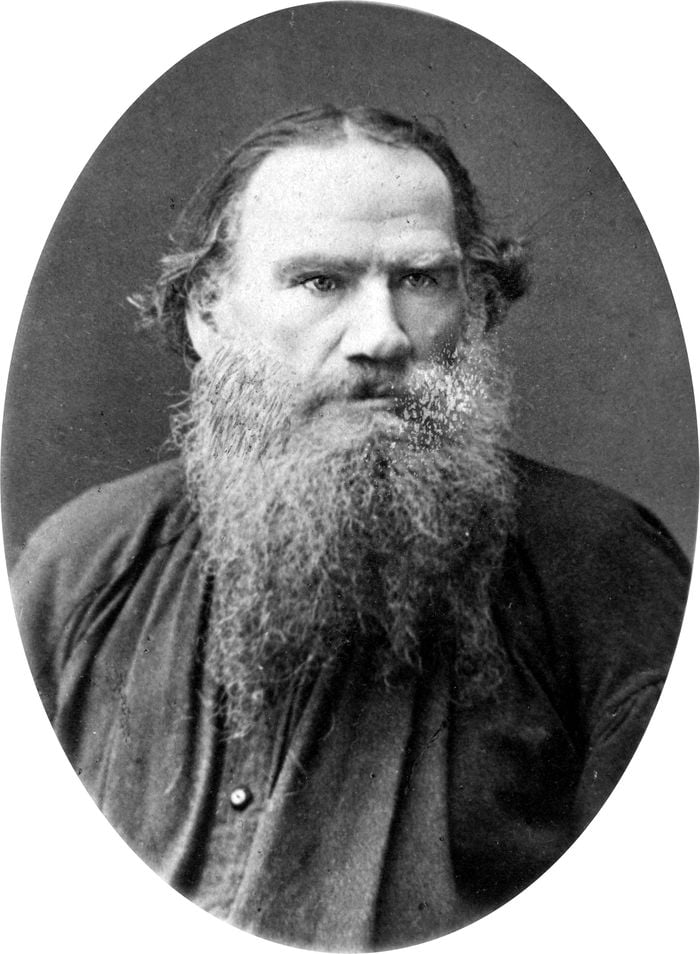
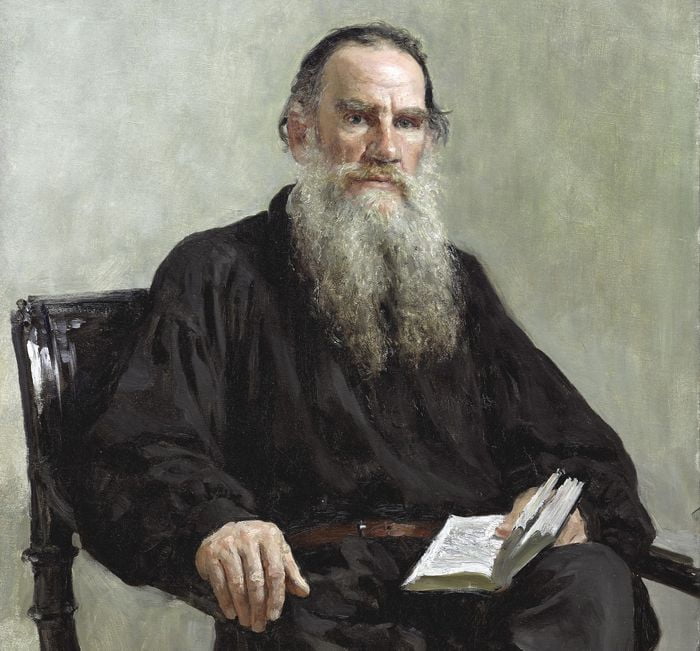
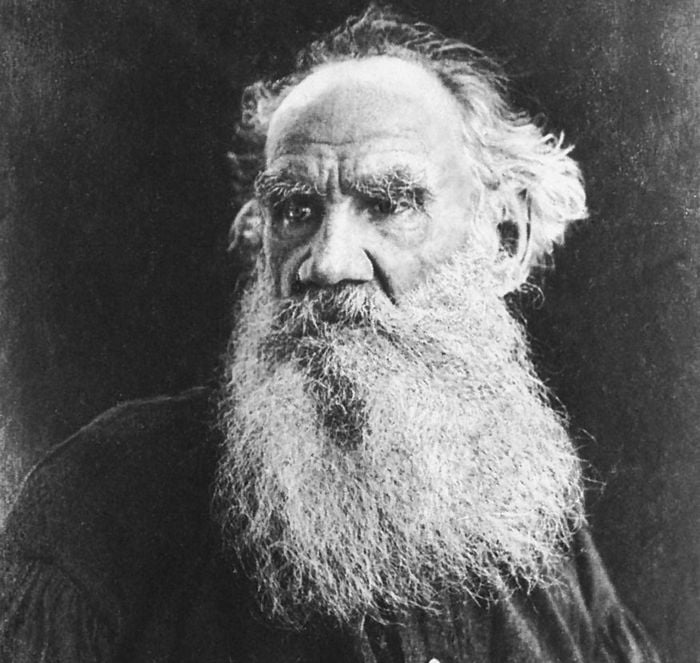
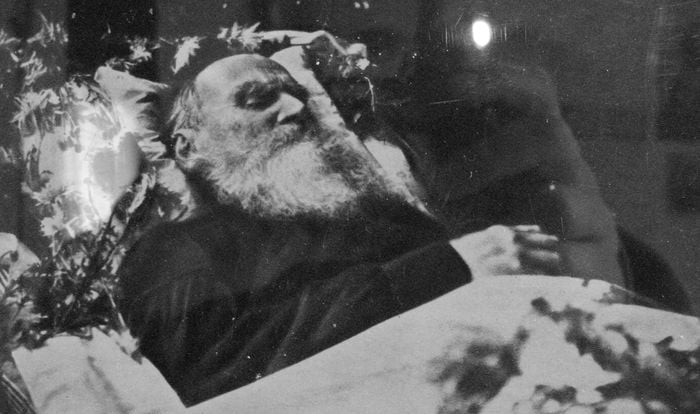
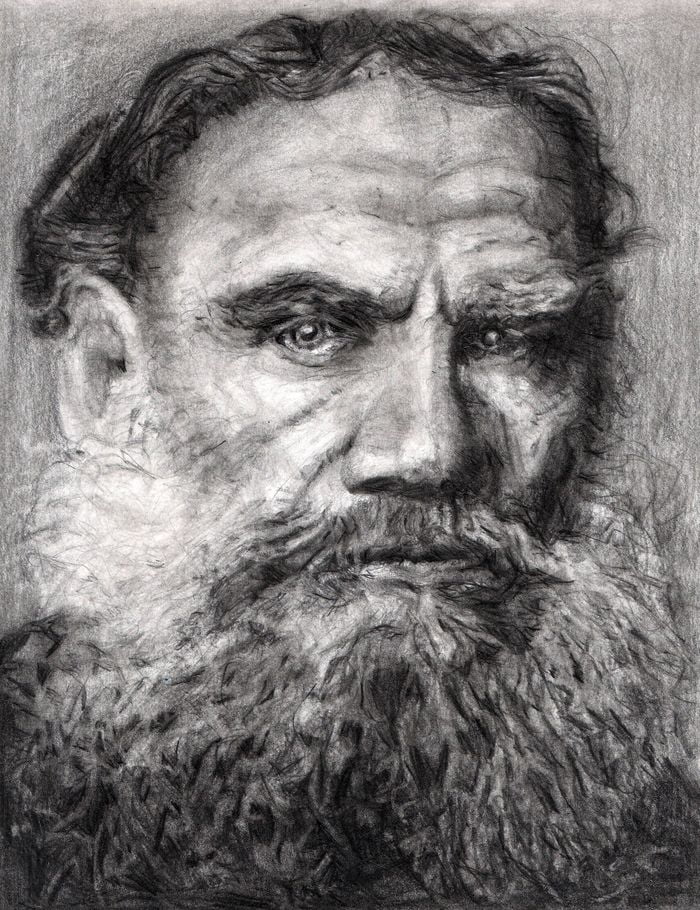
Leo Tolstoy (1828 1910)

Tolstoy is the most celebrated of all Russian writers. This extraordinary man, after serving in the army and leading a wild and reckless life, was for half a century the great interpreter of the life of his country, and during the last thirty years a religious and social prophet. He was preeminent as a novelist, though his complete works include a large number of fairy tales and short stories.

The present version, by Louise and Aylmer Maude, is reprinted by permission of the translators and publisher, from Twenty-Three Tales by Leo Tolstoy, published by Humphrey Milford, Oxford University Press in the Worlds Classics Series. The title in the original runs God Sees the Truth, but Waits.

The Long Exile

In the town of Vladimir lived a young merchant named Ivan Dmit- rich Aksionov. He had two shops and a house of his own.

Aksionov was a handsome, fair-haired, curly-headed fellow, full of fun, and very fond of singing. When quite a young man he had been given to drink, and was riotous when he had had too much; but after lie married he gave up drinking, except now and then.

One summer Aksionov was going to the Nizhny Fair, and as he bade good-bye to his family, his wife said to him, “Ivan Dmitrich, do not Mart to-day; I have had a bad dream about you.”

Aksionov laughed, and said, “You are afraid that when I get to the fair I shall go on a spree.”

His wife replied: “I do not know what I am afraid of; all I know is that I had a bad dream. I dreamt you returned from the town, and when you took off your cap I saw that your hair was quite gray.”

Aksionov laughed. “Thats a lucky sign,” said he. “See if I dont sell out all my goods, and bring you some presents from the fair.”

So he said good-bye to his family, and drove away.

When he had traveled half-way, he met a merchant whom he knew, and they put up at the same inn for the night. They had some tea together, and then went to bed in adjoining rooms.

It was not Aksionovs habit to sleep late, and wishing to travel while it was still cool, he aroused his driver before dawn, and told him to put in the horses.

Then he made his way across to the landlord of the inn (who lived in a cottage at the back), paid his bill, and continued his journey.

Read More about Taste of Balkan Tour

A Wagner Matinee part 6

0

During the intermission before the second half, I questioned my aunt and found that the “Prize Song” was not new to her. Some years before there had drifted to the farm in Red Willow County a young German, a tramp cow-puncher, who had sung in the chorus at Bayreuth when he was a boy, along with the other peasant boys and girls. On a Sunday morning he used to sit on his gingham-sheeted bed in the hands bedroom which opened off the kitchen, cleaning the leather of his boots and saddle, singing the “Prize Song,” while my aunt went about her work in the kitchen.

Boyish face

She had hovered over him until she had prevailed upon him to join the country church, though his sole fitness for this step, in so far as I could gather, lay in his boyish face, and his possession of this divine melody. Shortly afterward, he had gone to town on the Fourth of July, been drunk for several days, lost his money at a faro table, ridden a saddled Texas steer on a bet, and disappeared with a fractured collar-bone. All this my aunt told me huskily, wonderingly, as though she were talking in the weak lapses of illness.

“Well, we have come to better things than the old Trovatore at any rate, Aunt Georgie?” I queried, with a well-meant effort at jocularity.

Her lip quivered and she hastily put her handkerchief up to her mouth. From behind it she murmured, “And you have been hearing this ever since you left me, Clark?” Her question was the gentlest and saddest of reproaches.

The second half of the program consisted of four numbers from the Ring, and closed with Siegfrieds funeral march. My aunt wept quietly but almost continuously, as a shallow vessel overflows in a rain-storm. From time to time her dim eyes looked up at the lights, burning softly under their dull glass globes.

The deluge of sound poured on and on; I never knew what she found in the shining current of it; I never knew how far it bore her, or past what happy islands. From the trembling of her face, I could well believe that before the last number she had been carried out where the myriad graves are, into the gray, nameless burying grounds of the sea, or into some world of death vaster yet, where, from the beginning of the world, hope has lain down with hope and dream with dream and, renouncing, slept.

The concert was over; the people filed out of the hall chattering and laughing, glad to relax and find the living level again, but my kinswoman made no effort to rise. The harpist slipped the green felt cover over his instrument; the flute-players shook the water from their mouthpieces; the men of the orchestra went out one by one, leaving the stage to the chairs and music stands, empty as a winter cornfield.

I spoke to my aunt. She burst into tears and sobbed pleadingly. “I dont want to go, Clark, I dont want to go!”

I understood. For her, just outside the concert hall, lay the black pond with the cattle-tracked bluffs; the tall, unpainted house, with weather-curled boards, naked as a tower; the crook-backed ash seedlings where the dish-cloths hung to dry; the gaunt, moulting turkeys picking up refuse about the kitchen door.

Read More about Silence part 3

A Wagner Matinee part 5

0

The overture closed, my aunt released my coat sleeve, but she said nothing. She sat staring dully at the orchestra. What, I wondered, did she get from it? She had been a good pianist in her day, I knew, and her musical education had been broader than that of most music teachers of a quarter of a century ago. She had often told me of Mozarts operas and Meyerbeers, and I could remember hearing her sing, years ago, certain melodies of Verdi.

When I had fallen ill, with a fever in her house she used to sit by my cot in the evening when the cool night wind blew in through the faded mosquito netting tacked over the window and I lay watching a certain bright star that burned redmbove the cornfield and sing “Home to our mountains, O let us return!” in a way fit-to break the heart of a Vermont boy near dead of home-sickness already.

Seething turmoil

I watched her closely through the prelude to Tristan and Isolde, trying vainly to conjecture what that seething turmoil of strings and winds might mean to her, but she sat mutely staring at the violin bows that drove obliquely downward, like the pelting streaks of rain in a summer shower. Had this music any message for her?

Had she enough left, to at all comprehend this power which had kindled the world since she had left it. I was in a fever of curiosity, but Aunt Georgiana sat silent upon her peak in Darien. She preserved this utter immobility throughout the number from The Flying Dutchman, though her fingers worked mechanically upon her black dress, as if, of themselves, they were recalling the piano score they had once played. Poor hands! They had been stretched and twisted into mere tentacles to hold and lift and knead with; on one of them a thin worn band that had once been a wedding ring. As I pressed and gently quieted one of these groping hands, I remembered with quivering eyelids their services for me in other days.

Soon after the tenor began the “Prize Song,” I heard a quick drawn breath, and turned to my aunt. Her eyes were closed, but the tears were glistening on her cheeks, and I think, in a moment more, they were in my eyes as well.

It never really dies, then the soul which can suffer so excruciatingly and so interminably; it withers to the outward eye only; like that strange moss which can lie on a dusty shelf half a century, and yet, if placed in water, grow green again. She wept so throughout the development and elaboration of the melody.

Read More about The Long Exile part 6